
Dusky Flathead Angling Masterclass & Overview
Dusky flathead (Platycephalus fuscus) represent a premier estuary target across the Australian east coast. Selecting the correct tackle balance is critical for detecting subtle bites and controlling large fish in shallow water.
These fish are apex ambush predators. Their flattened profile allows them to bury into sand and mud substrates, waiting for the tidal current to deliver prey. When targeting monster dusky flathead, understanding this behaviour dictates your approach. They face into the current and strike upwards with explosive speed. You must present your lure moving with the natural water flow to trigger a reaction.
General flathead fishing relies on precise lure presentations and fast-action graphite rods. A sensitive blank transmits the sharp vibration of a strike when a flathead inhales a bait. This rapid blank recovery allows fishos to drive the hook through a solid bone structure instantly before the fish can eject the lure.
Land-based anglers casting from river banks require longer rods for maximum casting leverage. The extra blank length extends your reach over abrasive shoreline structure like oyster racks. Maintaining a high rod angle prevents fluorocarbon leader damage. Conversely, boat fishos target deeper drop-offs using shorter rods for superior mechanical leverage when lifting heavy fish off the seabed.
| Best Rods | Best Reels | Soft Plastics |
| Hard Bodies | Vibes & Jigs | Lines & Rigs |
Australian Flathead Locations & Seasonal Distribution
| Region | Hotspots | Season |
|---|---|---|
| 1. Tropical QLD | Cairns, Mourilyan Harbour | May – September |
| 2. South East QLD | Brisbane River, Gold Coast Broadwater | Year-Round |
| 3. NSW Coast | Lake Macquarie, St Georges Basin | September – May |
| 4. Eastern Victoria | Gippsland Lakes, Mallacoota | November – April |
| 5. East Coast TAS | St Helens, Georges Bay | December – March |
State Regulations, Size Limits & Trophy Protections (2026)
| State | Size Limit | Bag Limit |
|---|---|---|
| QLD | 40cm – 75cm Slot | 5 (Possession 10) |
| NSW | 36cm – 70cm Slot | 5 (Possession 10) |
| VIC | 30cm – 55cm Slot | 5 (Daily Bag) |
| TAS | 32cm Minimum | Varies by Region |
| SA | 30cm Minimum | 10 (Daily Bag) |
Flathead Fishing Techniques by Environment
1. Estuary Shallows (1 to 2 Metres): Target sand flats that heat up quickly under the morning sun. Cast unweighted soft plastics or suspending jerkbaits (like the Daiwa Double Clutch) to mimic fleeing baitfish. Flathead lie camouflaged on the edges of sandbar drop-offs waiting to ambush passing prey as the tide recedes.
2. Deep River Drop-offs (3 to 10 Metres): Position the boat along the deep edges of navigation channels. Use heavy jigheads (3/8oz to 1/2oz) or dense metal vibes to keep the lure in contact with the bottom. Drift vertically with the current and execute an aggressive hop-and-pause retrieve.
3. Weed-bed Edges: Cast parallel to ribbon weed lines. Flathead position themselves facing into the current on the clean sand patches directly adjacent to the weed. Run shallow diving hard bodies or buoyant soft plastics just above the vegetation to draw explosive vertical strikes.
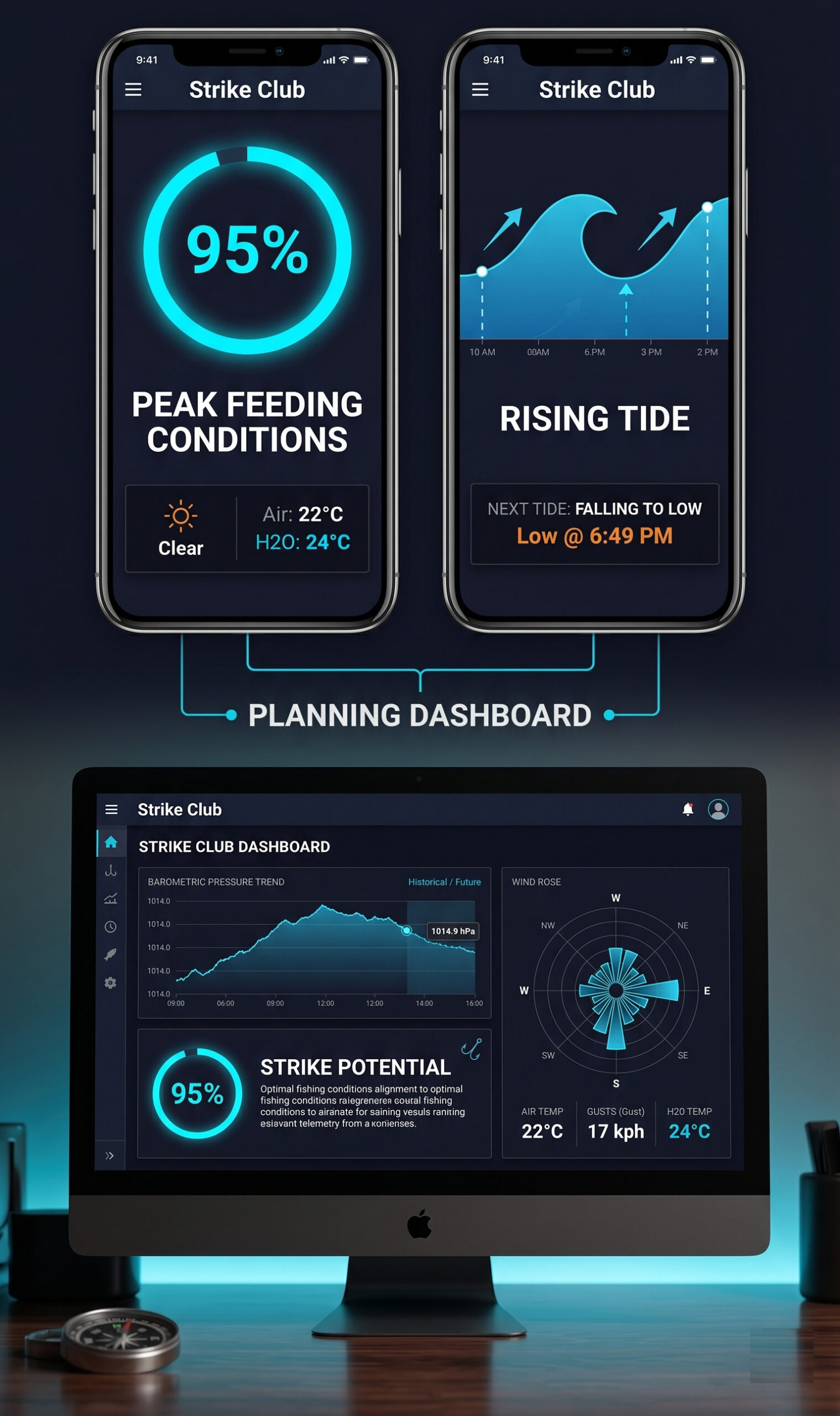
4. Tidal Influence & Feeding Windows: The falling (run-out) tide is universally the most productive phase. As water drains from the shallow mangroves and saltmarshes, baitfish and prawns are forced into deeper channels. Flathead congregate at these funnel points to feed heavily. Concentrate your effort during the last two hours of the run-out tide.
Advanced Sounder Configuration & Tactics
Marine Electronics (Side-Scan Imaging): Traditional 2D sonar struggles to identify flathead because they do not have a large swim bladder and they lie flat against the bottom. Switch your unit to Side-Scan or Structure-Scan operating at 455kHz or 800kHz. Look for distinct bottom transitions where soft mud meets hard sand or gravel. Large flathead will appear as small, bright white rice-grain returns with a distinct dark acoustic shadow cast behind them.
Boat Positioning (Spot-Lock): When drifting deep channels, use a GPS-enabled electric trolling motor. Once a strike is detected or a cluster of fish is marked on the sounder, immediately engage the Spot-Lock function. Flathead frequently hunt in loose aggregations. Holding your position allows fishos to thoroughly cast to the active zone before the current pushes the vessel away.
Berley Deployment (Bait Fishing): When anchoring with bait, deploy a continuous, fine trail of mashed pilchards and chicken pellets. In high-current zones, sink the berley pot directly to the seabed using a heavy dive weight. This keeps the scent trail concentrated along the bottom where the flathead are holding, rather than washing away in the surface layers.