
Mangrove Jack Angling Masterclass & Overview
Mangrove Jack (Lutjanus argentimaculatus), colloquially known as the ‘red dog’, represent Australia’s most ferocious close-quarters estuary predator. Targeting these heavy-shouldered snappers requires powerful, locked-drag tackle capable of absorbing savage reaction strikes and extracting fish from dense structure within seconds. A split-second delay in reaction time will result in an immediate cut-off against oyster-encrusted snags or rock ledges.
Mangrove jacks possess large canine teeth and immense burst acceleration designed to ambush prey before darting back into cover. Estuary lure casting requires 30lb to 50lb braided mainline connected to 30lb to 60lb high-abrasion fluorocarbon leaders. Upgrading lure hardware to reinforced 4X split rings and trebles is mandatory to withstand the crushing bite pressure of a 50cm+ trophy jack.
Casting tight to structure is essential across all tidal environments. Accurate skip-casting puts paddle tails, suspending jerkbaits, and weedless frogs deep beneath mangrove overhangs and pontoon walkways. Retrieve presentations with aggressive jerks followed by 3-second pauses to draw explosive reaction bites from resting ambush predators.
Boat and kayak fishos utilize forward-facing live sonar and side-scan imaging to locate jacks sheltering on deep rock bars and bridge pylons. Anchoring up-current and dropping heavy soft vibes or live poddy mullet down deep structure produces consistent trophy fish during summer low-light periods. Warm, humid afternoons preceding summer thunderstorms deliver the most productive bite windows of the season.
| Best Rods | Best Reels | Soft Plastics |
| Hard Bodies | Vibes & Jigs | Lines & Rigs |
Australian Mangrove Jack Locations & Seasonal Distribution
| Region | Primary Habitat | Hotspots | Peak Season |
|---|---|---|---|
| 1. Tropical North QLD | Mangrove Creeks & Inshore Reefs | Hinchinbrook Channel, Daintree River, Cairns Inlets | October – April (Wet Season) |
| 2. Central & South East QLD | Canals, Pylons & Rock Bars | Gold Coast Canals, Noosa River, Maroochy River | November – March (Summer Peak) |
| 3. Northern NSW | Tidal Rivers & Retaining Walls | Tweed River, Richmond River, Clarence River | December – April |
| 4. Top End NT | Tidal River Snags & Rock Bars | Daly River, Mary River, Darwin Harbour Arms | March – May / Sept – Nov |
| 5. The Kimberley & Pilbara WA | Creek Systems & Tidal Gorges | Ord River, Dampier Archipelago, Exmouth Gulf | April – November |
State Regulations, Size Limits & Bag Allocations (2026)
| State / Territory | Size Limit | Daily Bag Limit | Specific Regulations |
|---|---|---|---|
| QLD (Tidal & Fresh Waters) | 35cm Minimum | 5 per person | Possession limit: 5 in total. No closed season applies |
| NSW (State-wide) | No Minimum Size | 5 per person | Possession limit: 10 in total |
| WA (State-wide) | 30cm Minimum | 2 per fisher | Must fit within the mixed nearshore finfish daily limit of 16 |
| NT (State-wide) | 35cm Minimum | 3 per person | Included within the general coastal finfish limit of 15 |
Mangrove Jack Fishing Techniques by Environment
1. Mangrove Roots & Fallen Timber: Target undercut root banks and heavy laydowns on the last two hours of the falling tide. Cast weedless soft plastics or suspending jerkbaits deep into the dark shadows. Strike hard instantly upon feeling the take to turn the fish’s head before it reaches the main root ball.
2. Canal Pylons, Pontoons & Retaining Walls: Urban canal systems hold massive resident jacks around artificial structure. Cast diving hardbodies parallel to concrete walls or skip paddle tails under floating pontoon trays. Retrieve with sharp, aggressive twitches and extended 3-second pauses right alongside the pylon.
3. Deep Estuary Rock Bars & Bridge Foundations: In water deeper than 4 metres, jacks school on the up-current side of submerged rock bars and bridge footings. Deploy heavy 15g to 25g soft vibes or live poddy mullet vertically close to the rock face. Use an electric motor on spot-lock to hold position above the strike zone.
4. Shallow Flats & Mangrove Drains (Topwater): During low-light dawn, dusk, and night sessions, jacks leave deep snags to hunt across shallow mud flats and draining gutters. Cast surface walk-the-dog stickbaits or paddling wakebaits over 50cm of water. Retrieve with a steady spitting cadence to trigger explosive surface strikes.
Locked-Drag Physics, Sonar Tracking & Water Temperature
Locked-Drag Hooksetting Physics: Set your baitcaster star drag to maximum lockup (80% to 90% breaking strain). The initial 2 seconds of the fight determine the outcome. Thumb the spool firmly on strike and use the full mechanical lifting power of the rod blank to wrench the fish 1 metre clear of the timber before backing off.
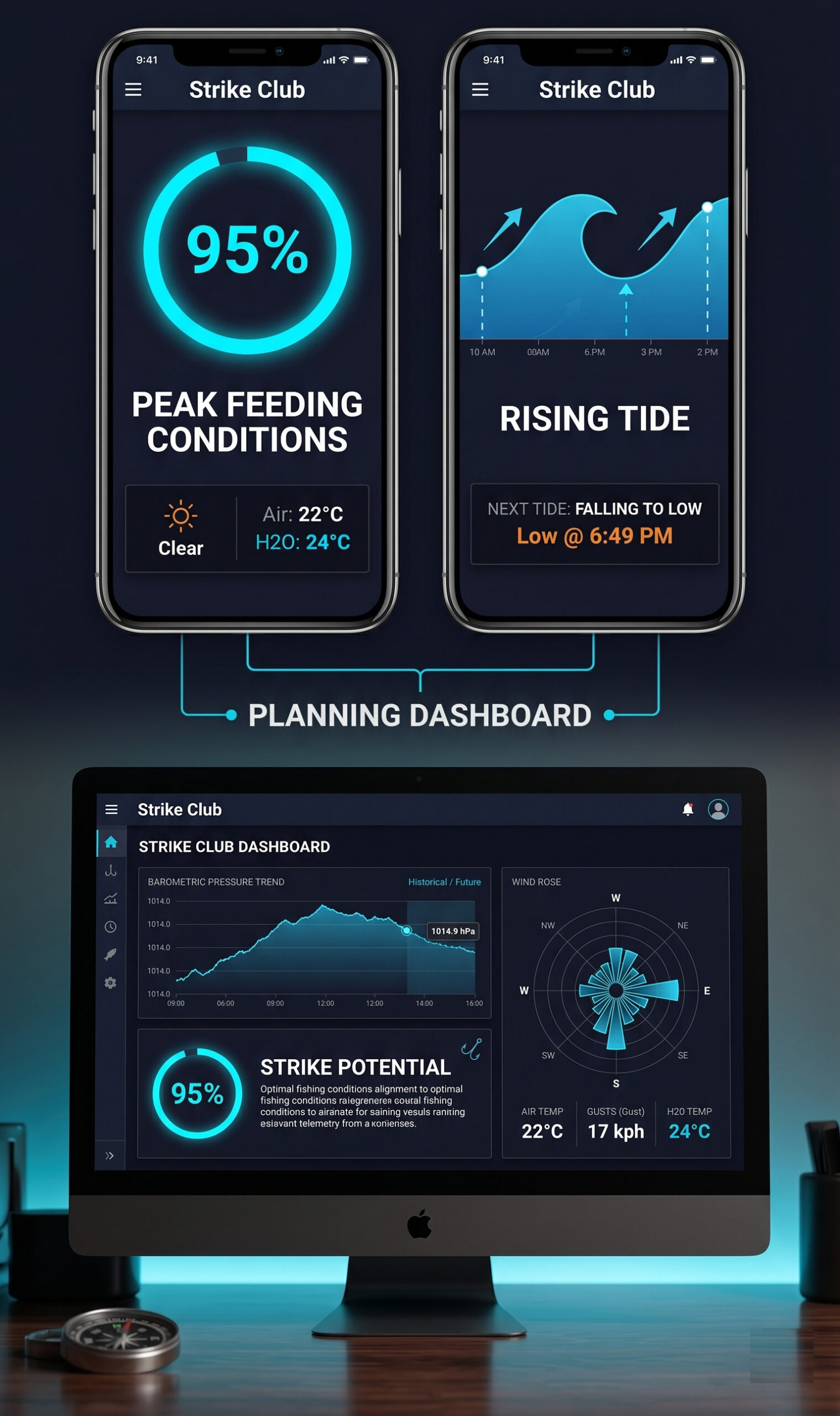
Water Temperature Thresholds: Mangrove jacks are tropical species whose metabolic activity depends heavily on water temperature. Feeding activity spikes when estuarine water temperatures rise above 24°C, with peak aggression occurring between 26°C and 30°C. In winter, activity drops sharply, requiring dead-slow vertical presentations in deep holes.
Leader Abrasion Management: Always connect a minimum of 30lb to 50lb high-tensile Japanese fluorocarbon leader when fishing heavy snags. Fluorocarbon has superior surface hardness compared to monofilament, resisting the razor-sharp oyster shells that encrust mangrove roots and pylons. Inspect leaders after every strike for fraying.