
Murray Cod Angling Masterclass & Overview
Murray Cod (Maccullochella peelii) are Australia’s largest and most iconic native freshwater apex predator. Targeting giant river and impoundment cod demands heavy-duty baitcaster outfits capable of casting oversized lures and locking down violent close-quarters strikes in heavy timber. Matching your rod backbone and line class directly to the structure you are fishing is the difference between landing a metre-plus trophy and suffering an instant line failure.
Murray cod are territorial ambush predators that use cavernous bucket mouths to engulf prey through powerful suction implosion. This violent vacuum strike produces an unmistakable underwater acoustic ‘boof’ as the fish inhales water and forage whole. River lure casting utilizes 30lb to 50lb braided mainline for casting accuracy with spinnerbaits, whereas impoundment swimbaiting demands 50lb to 80lb braid to extract fish from flooded timber. Reinforced 4X to 6X hooks are mandatory to penetrate tough bony jaw plates and resist jaw crushing.
Inland river systems revolve around casting heavy spinnerbaits, hardbody divers, and surface paddlers tight to sunken red gum logs and root balls. Short, accurate underhand casts allow fishos to bump structure and extract territorial fish before they wrap around submerged snags. Working current seams below weir pools and deep rock bars during low-light periods triggers aggressive territorial strikes.
Stocked impoundments like Copeton, Eildon, and Burrinjuck center on targeting metre-plus fish with massive 150mm to 250mm swimbaits and surface wakebaits. Utilizing forward-facing live sonar allows anglers to track suspended fish along deep rocky points and slow-roll lures directly through the strike zone. Night fishing during cold winter full-moon phases produces the most explosive surface bite windows of the year.
| Best Rods | Best Reels | Soft Plastics |
| Hard Bodies | Vibes & Jigs | Lines & Rigs |
Australian Murray Cod Locations & Seasonal Distribution
| Region | Environment | Hotspots | Peak Season |
|---|---|---|---|
| 1. NSW Inland Dams | Stocked Impoundments | Copeton Dam, Blowering Dam, Burrinjuck Dam | Year-Round (Winter Swimbait Peak) |
| 2. Murray-Darling River Basin (NSW/VIC) | Main Rivers & Anabranches | Murray River, Murrumbidgee River, Edward River | 1 December – 31 August |
| 3. Victorian Impoundments | Deep Alpine / Valley Lakes | Lake Eildon, Lake Eppalock, Cairn Curran | Year-Round (Stocked Waters) |
| 4. Southern QLD Impoundments | Highland / SIPS Dams | Glenlyon Dam, Coolmunda Dam, Leslie Dam | Year-Round (Spring Surface Peak) |
| 5. Australian Capital Territory | Urban Lakes & Rivers | Lake Burley Griffin, Murrumbidgee River | 1 December – 31 August |
State Regulations, Size Limits & Closed Seasons (2026)
| State / Waterway | Size Limit | Daily Bag Limit | Closed Season & Exemptions |
|---|---|---|---|
| NSW General Rivers | 55cm – 75cm Slot | 2 per person (Possession 4) | Closed 1 Sept – 30 Nov (All general river waters) |
| NSW Copeton & Blowering Dams | 55cm – 75cm Slot | 2 per person (Possession 4) | Open year-round (No closed season applies) |
| VIC General Rivers | 55cm – 75cm Slot | 1 per person (Possession 5) | Closed 1 Sept – 30 Nov. Cannot fillet on water (must keep whole/carcass) |
| VIC Year-Round Impoundments | 55cm – 75cm Slot | 2 per person | Open year-round: Eildon, Eppalock, Cairn Curran, Nillahcootie, Lascelles, Willow & Ouyen lakes |
| QLD (Murray-Darling Division) | 60cm – 110cm Slot | 2 per person | Closed 1 Aug – 31 Oct. Open year-round in SIPS dams: Connolly, Cooby, Coolmunda, Glenlyon, Leslie & Storm King |
| ACT (Public Waters) | 55cm – 75cm Slot | 2 (1 in Murrumbidgee) | Closed 1 Sept – 30 Nov. Strict zero-take zone below Uriarra Crossing |
Murray Cod Fishing Techniques by Environment
1. Standing Timber & Flooded Trees (Impoundments): Cast giant 150mm to 200mm soft swimbaits or wakebaits tight to deep tree trunks. Let the lure sink along the vertical timber line before initiating a slow, steady roll. Cod suspend alongside trunks waiting to ambush passing baitfish.
2. River Snags & Red Gum Root Balls: Position the boat up-current from heavy timber laydowns. Cast heavy spinnerbaits or deep crankbaits tight to the upstream side of the snag. Allow the lure to bump directly into the logs to trigger territorial defensive strikes.
3. Surface Night Fishing (Wakebaits & Paddlers): In both rivers and dams, cod hunt actively on the surface under low-light and night conditions. Cast large paddling wakebaits along shallow rocky banks and retrieve with a slow, continuous ‘plop-plop’ cadence. Use a supple monofilament or nylon shock leader to prevent the leader from sinking and dragging the lure nose down.
4. Deep River Holes & Scours: During bright midday conditions, river cod retreat into 4m to 8m deep scours below weir pools and bends. Deploy heavy 1oz to 1.5oz spinnerbaits or deep-diving hardbodies down to the riverbed, working them slowly through bottom current seams.
Live Sonar Calibration, Barometric Pressure & Hooking Physics
Forward-Facing Sonar (LiveScope / ActiveTarget): Set forward range to 25 to 30 metres. Metre-plus cod appear as large, dense acoustic returns holding suspended off timber or cruising along 4m to 8m drop-offs. Cast 5 metres past the fish and slow-roll your swimbait through their eye-level line.
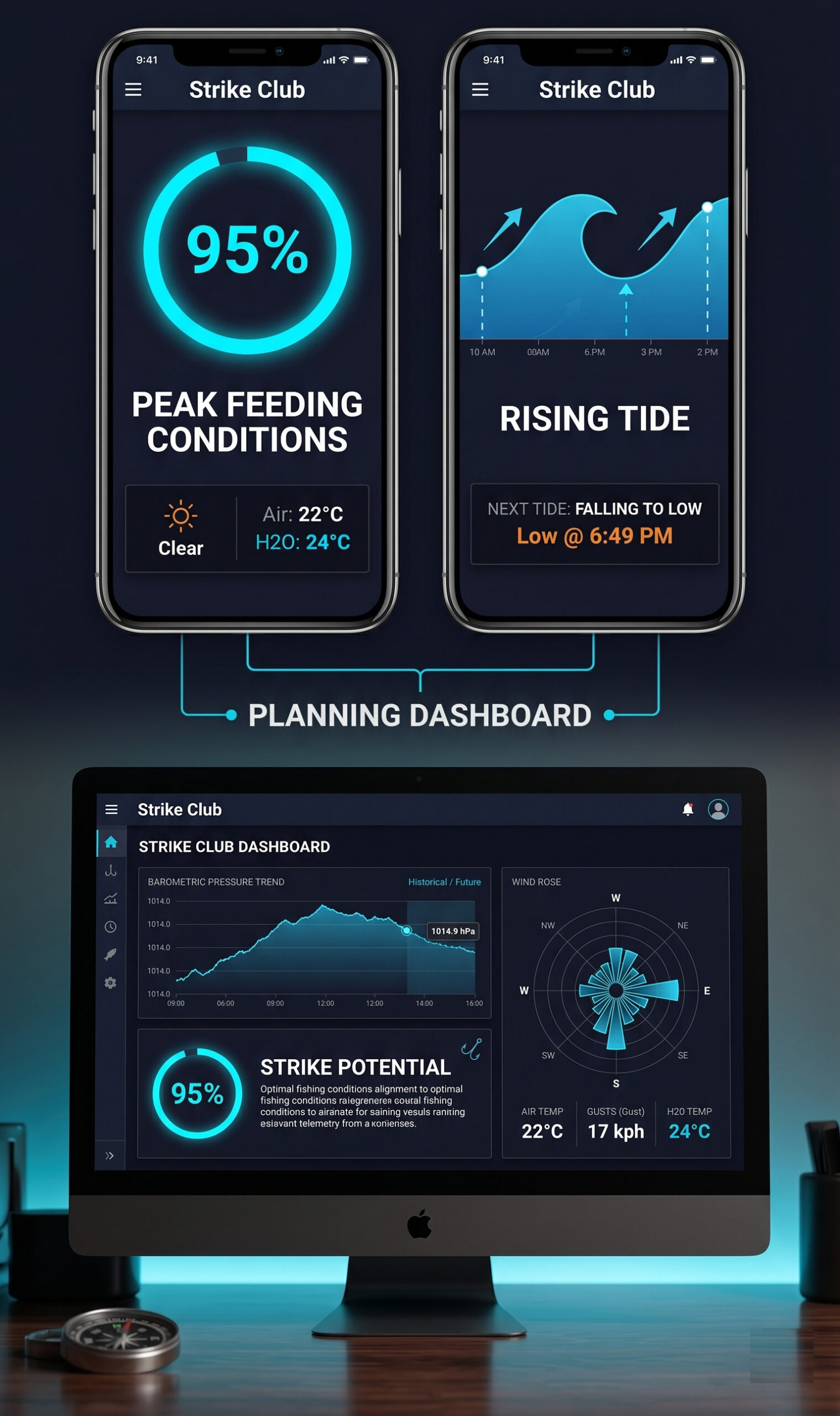
Barometer & Full Moon Influence: Murray cod are apex barometric predators. A steady or rising barometer above 1015 hPa triggers major feeding runs. In stocked impoundments like Copeton, cold clear winter nights aligned with the full moon produce trophy surface bite windows.
Locked-Drag Hooksetting & Rod Cushioning: Set baitcaster star drags to near-lockup (80% breaking strain). When using zero-stretch 80lb braid locked up tight on short line lengths near the boat, maintain a parabolic bend in your rod or utilize a composite/fiberglass blend rod. This rod cushioning acts as a crucial shock absorber, preventing sudden hook fractures or pulling hooks out of the soft skin around a surging cod’s jaw plate.