
Spanish Mackerel Angling Masterclass & Overview
Spanish Mackerel (Scomberomorus commerson), commonly known as ‘narrow-barred Spanish mackerel’ or ‘spanyards’, represent the premier high-speed coastal pelagic gamefish of Northern and subtropical Australia. Inhabiting ocean current lines, offshore coral reefs, and rocky headlands from Queensland across the Top End and down into Western Australia and New South Wales, mackerel demand specialized high-speed trolling tackle, single-strand wire leaders, and high-capacity reels. Matching 7-foot to 8-foot heavy casting blanks with high-speed 8000 to 10000 spinning reels or lever-drag overheads is essential for surviving initial blistering 80km/h surface runs.
Spanish mackerel possess triangular razor-sharp shearing teeth capable of severing thick monofilament and fluorocarbon leaders in a single bite. Anglers must deploy 30cm to 45cm of single-strand stainless steel wire (#5 to #8 / 44lb to 86lb) connected via a Haywire Twist directly to terminal hooks or solid rings. Braided mainline in 40lb to 60lb classes (PE 3.0 to PE 5.0) provides the necessary spool capacity to absorb explosive 150-metre screaming runs without risking spool burnout.
High-speed trolling along 15 to 30-metre depth contours and outer barrier reef pressure edges is the most productive searching technique. Deploying deep-diving polycarbonate minnows (such as Nomad DTX Minnow and Halco Laser Pro) at 7 to 10 knots forces deep-holding mackerel into reaction strikes. Trolling spreads should be staggered with one deep-diving minnow, one bibless minnow, and a shallow surface garfish skipping on the outrigger.
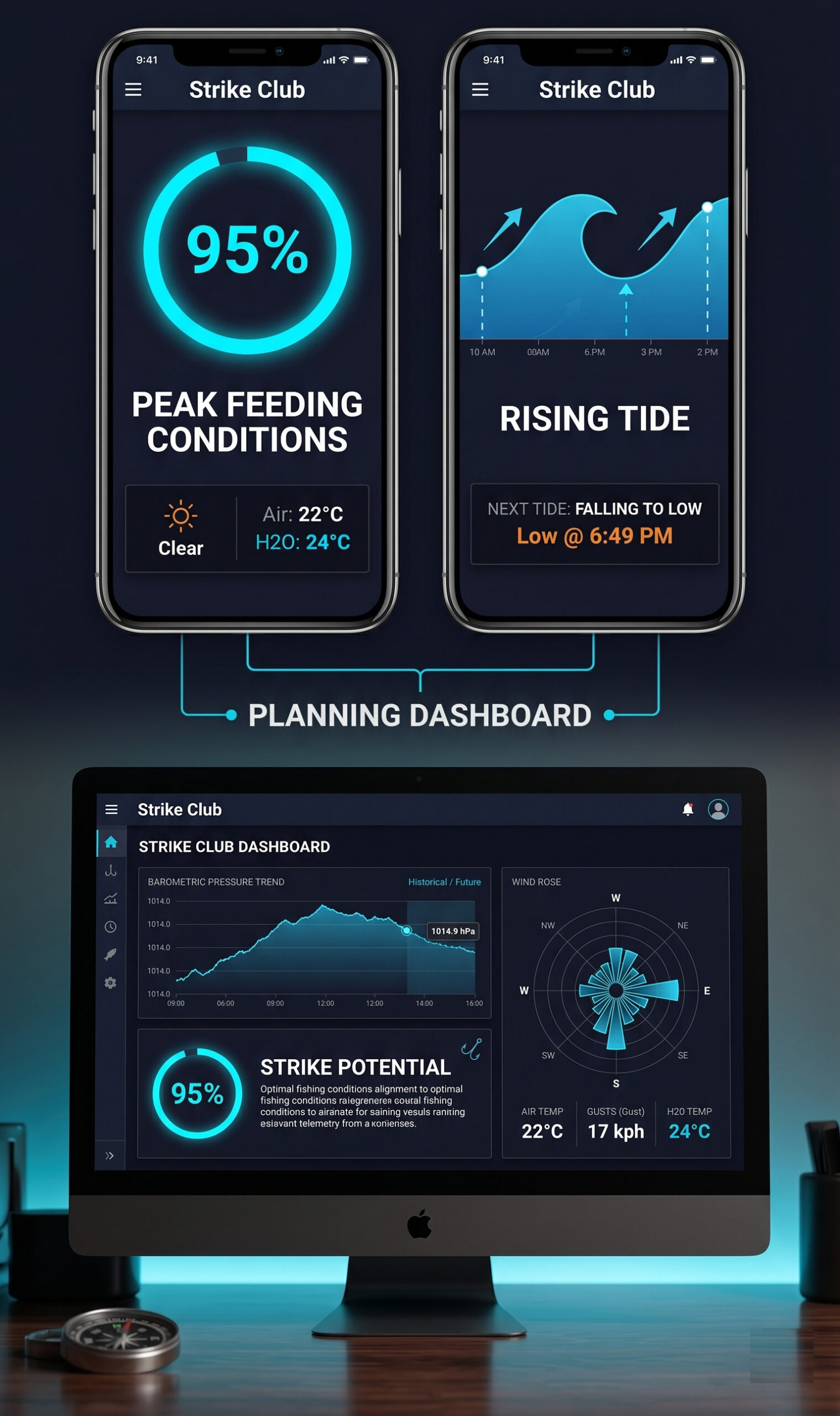
Slow-trolling and drifting live baits (such as whole sea garfish, ribbonfish, or live yellowtail scad) around beacon channels and current drop-offs produces giant trophy fish over 20kg. Rigging baits on multi-hook stinger rigs ensures trailing tail-bites are converted into solid hooksets. Early morning bite windows coinciding with the first two hours of the rising tide deliver the most frantic feeding periods of the day.
| Best Rods | Best Reels | Soft Plastics |
| Hard Bodies | Vibes & Jigs | Lines & Rigs |
Australian Spanish Mackerel Locations & Seasonal Distribution
| Region | Primary Habitat | Hotspots | Peak Season |
|---|---|---|---|
| 1. Far North QLD & Coral Sea | Outer Barrier Reefs & Ocean Passes | Lizard Island, Cairns Outer Reefs, Ribbon Reefs, Townsville Shoals | August – December (Spring Spawning Aggregations) |
| 2. Central & South East QLD | Inshore Shoals, Beacons & Cape Points | Moreton Bay Beacons, Noosa Reefs, Hervey Bay, Yeppoon | December – May (Summer/Autumn Run) |
| 3. Western Australia (Pilbara & Ningaloo) | Fringing Reefs & Continental Drop-offs | Exmouth Gulf, Ningaloo Reef, Dampier Archipelago, Montebello Islands | April – November (Dry Season Peak) |
| 4. Northern Territory (Top End) | Tidal Reef Drops & Channel Headlands | Darwin Harbour Wide, Tiwi Islands, Dundee Beach, Gove | May – October (Dry Season Run) |
| 5. Northern & Central NSW | Warm Current Edges & Island Washes | Tweed Heads, Coffs Harbour, South West Rocks, Port Stephens | January – May (East Australian Current Run) |
State Regulations, Size Limits & Spawning Closures (2026)
| State / Territory | Minimum Size | Daily Bag / Possession Limit | Closures & Boat Caps |
|---|---|---|---|
| Queensland (East Coast) | 85cm Minimum | 1 per person (Boat limit: 2) | Strict seasonal closures apply in northern & southern East Coast zones |
| Queensland (Gulf of Carpentaria) | 85cm Minimum | 3 per person (Boat limit: 6) | Possession limit: 3 per person in all Gulf tidal waters |
| Western Australia (DPIRD WA) | 90cm Minimum | 2 per fisher | Governed within the 4-fish combined large pelagic / demersal bag limit |
| New South Wales (NSW DPIRD) | 75cm Minimum | 5 per person | Possession limit: 10 per person statewide. No closed season applies |
| Northern Territory (NT Fisheries) | No Minimum Size | 5 per person | Possession limit: 15 general reef & pelagic finfish per person statewide |
Spanish Mackerel Fishing Techniques by Environment
1. Outer Barrier Reef Drop-offs & Pressure Edges (High-Speed Trolling): Troll deep-diving minnows (such as Nomad DTX 200 or Halco Laser Pro 190) at 7 to 10 knots along 18m to 30m reef contours. The high speed prevents bycatch from striking while triggering violent predatory attacks from cruising Spanish mackerel. Stagger lure distances 30m to 60m behind the boat.
2. Inshore Beacon Channels & Headlands (Slow-Troll Live Baits): Idle along current pressure lines around navigation beacons and ocean headlands at 1.5 to 2.5 knots. Deploy live yellowtail scad or fresh sea garfish rigged on single-strand wire stinger rigs 20 metres behind the boat. Use a small downrigger weight to position one bait 5 metres beneath the surface.
3. Surface School Bust-Ups & Boiling Bait (High-Speed Spinning): Approach boiling bait schools from up-wind with the engine at low idle. Cast 55g to 85g chrome metal casting slugs or sinking stickbaits past the school. Engage the reel handle instantly and burn the lure across the surface at maximum retrieval speed.
4. Drifting Floating Baits on Anchor (Chum Trail): Anchor up-current of isolated reef shoals during tide turns. Establish a continuous berley trail consisting of minced pilchards and tuna oil. Float an unweighted whole pilchard or garfish on a 4-hook gang set down the berley slick on open bail or light clicker drag.
Single-Strand Wire Physics, High-Speed Trolling & Haywire Twists
Single-Strand Wire vs Multi-Strand Cable: Spanish mackerel have triangular razor teeth that slice nylon and fluorocarbon instantly. Always use 30cm to 45cm of brown coffee-colored single-strand stainless steel wire (#5 to #8 / 44lb to 86lb). Single-strand wire cuts through the water without vibrating or bubbling at 10-knot trolling speeds, unlike coated cable which creates a bubble trail that attracts mid-leader bite-offs.
The Haywire Twist Connection: Never crimp or knot single-strand stainless wire. Always terminate wire connections using a traditional Haywire Twist consisting of 4 tight barrel wraps followed by 4 tight barrel turns (corkscrew finish). Break the tag end off cleanly by rocking it back and forth to create a smooth, burr-free terminal connection.
High-Speed Strike Drag Mechanics: When high-speed trolling at 8+ knots, set your lever drag or star drag to a firm 4kg to 6kg setting. The boat’s forward momentum drives the heavy-gauge hook through the mackerel’s jaw cartilage on the strike. Once the fish starts its high-speed initial run, maintain a steady rod angle and do not touch the drag knob.