
Appearance & Identification
These robust, slightly high-backed fish are distinguished by their deep olive-green to bronze-silver body coloration that darkens significantly as they age. They possess incredibly powerful, large eyes and a prominent, slightly underslung jaw designed for capturing surface insects and baitfish. Their tails are large and slightly rounded, providing the sudden explosive bursts of speed needed to retreat instantly into deep timber. Juvenile specimens present a brighter, more silver coloration, while mature river brawlers present a solid, dark bronze-green hue.
Habitat & Movements
Australian bass are native to the freshwater rivers, creeks, and impoundments of Australia’s eastern coastline from southern Queensland down to Victoria. They are structure-obsessed predators that seek shelter beneath submerged timber logs, rock bars, and overhanging paperbark branches. During the summer, they actively patrol the shallow river rapids and surface pools, while the winter months see them migrate down to the brackish estuaries to spawn. They use their intense coloration to camouflage themselves in the shadows, waiting to launch explosive strikes on passing prey.
Tactical Loadout
- Rods Utilize a medium to fast-action, light-spinning or baitcasting rod of 1.8m to 2.1m rated between 2kg and 5kg. This rod length provides the exceptional casting accuracy needed to skip lures deep under overhanging branches. A stiff butt section is absolutely mandatory to absorb the violent, head-shaking shockwaves of the initial strike.
- Reels Pair your rod with a smooth, high-quality 1000 to 2000 size spinning reel or a compact, low-profile baitcasting reel. The reel must possess a minimum of 4kg of smooth carbon fiber drag to stop these fish before they reach the structure. A high retrieve ratio of six to one is essential to quickly collect slack line and prevent the fish from wrapping your line.
- Line & Leader Utilize 4kg to 6kg braided main line to guarantee zero stretch and maximum sensitivity over deep water. Couple this with a long, 2m leader of 4kg to 6kg hard-shell fluorocarbon to withstand constant abrasion against sharp timber. It is crucial to check your leader regularly for knicks or frays after retrieving from a snag.
Best Lures & Baits
- Artificials Cast surface cicada poppers, small spinnerbaits, or weedless soft plastics rigged on 1/16 oz jig heads over the deep timber logs. Retrieve your surface poppers with a slow, twitch-and-pause retrieve, allowing the lure to sit completely stationary near the bank. Bouncing small chatterbaits directly into the rock crevices on a slow wind is also highly effective.
- Live & Cut Baits Fresh, live freshwater prawns, active earthworms, or live crickets are the standout natural presentations for drawing bass. Present these baits on a running sinker rig using a chemically sharpened size 2 to 4 baitholder hook to ensure a secure hook-up. Fish these baits with minimal weight along the deep river bends during the early morning.
Field Tactics
- Trolling Trolling is not a highly common method, but slow-trolling deep-diving hardbodies along steep river rock walls can locate active fish. Position your vessel just off the structure and troll at a slow crawl of one to two knots to allow the lure to dive. Ensure your drag is locked down tight to prevent the fish from reaching the rocks.
- Drifting & Jigging Drifting quietly in a kayak or canoe down the river pools while casting into the timber is a highly productive method. Position your craft up-stream of the target pool and allow the natural flow to carry you silently through the reach. Keep your reel engaged and maintain a tight line to instantly feel the heavy, solid strike of a bass.
- Fly Fishing Utilize a light 5 to 6 weight fly rod equipped with a weight-forward floating line to target bass feeding near the surface. Cast large, highly buoyant foam cicada or gurgler patterns on a 4kg leader, stripping them slowly with long pauses. The retrieve must be slow and erratic to trigger a competitive strike.
State Legal Limits
QLD: Minimum size limit is thirty centimeters. Daily bag limit of two per person in designated impoundments.
NSW: Daily bag limit of two. Only one fish can be taken over thirty-five centimeters from rivers.
VIC: Minimum size limit is twenty-seven centimeters. Daily bag limit of five per person.
WA: Not present in Western Australian waters.
SA: Not present in South Australian waters.
NT: Not present in Northern Territory waters.
TAS: Not present in Tasmanian waters.
Final Logistics & Table Quality
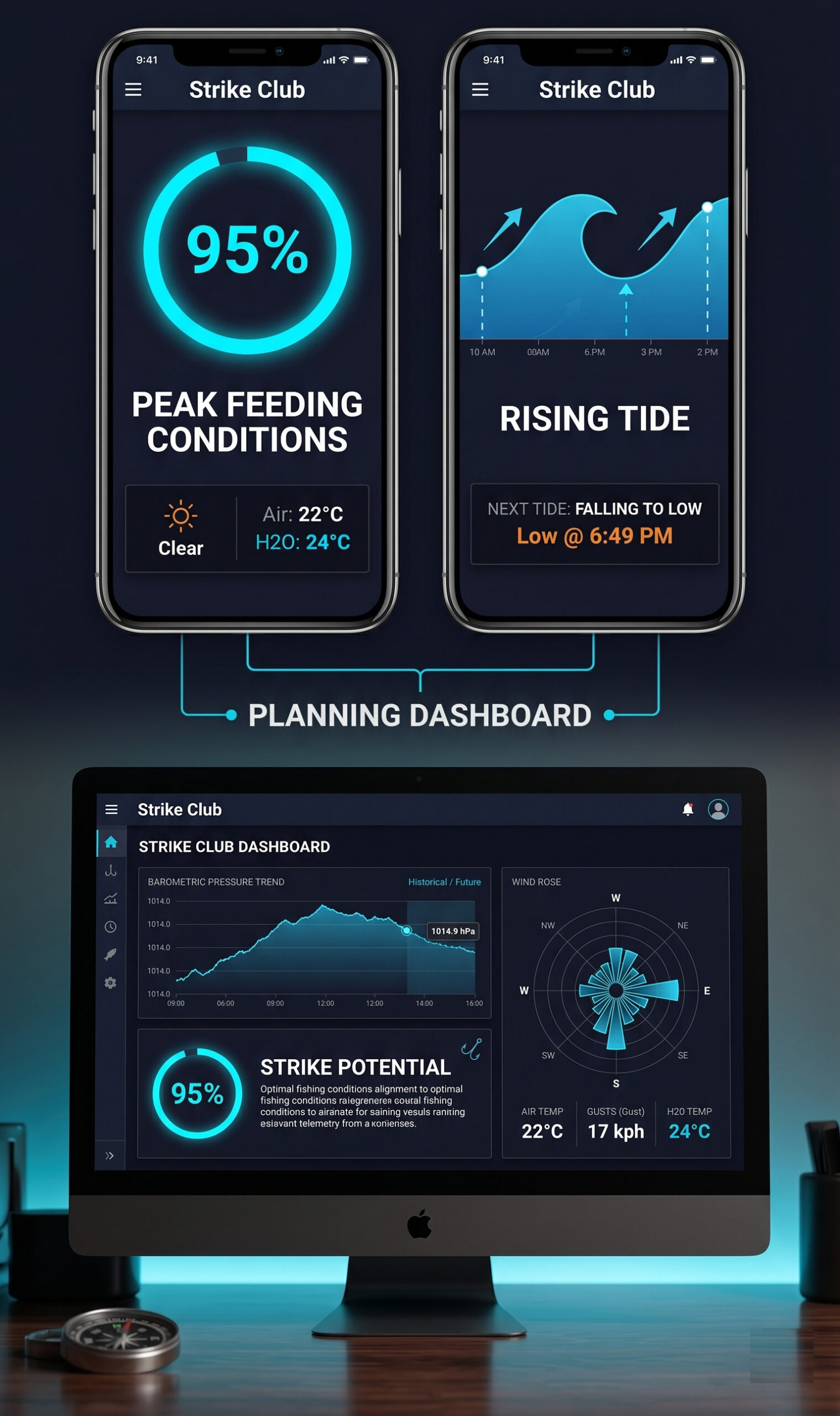
- Field Notes The absolute secret to success is targeting the shallow river pools during the peak of a warm, humid summer afternoon just before a storm. Bass are highly sensitive to barometric pressure and feed aggressively under these low-light, pre-storm conditions. Always check your local state laws closely, as strict seasonal closures apply during the winter spawning migration. Clean your gear thoroughly with fresh water after every session to prevent salt corrosion on your light drags.
- Eating Qualities Australian bass possess firm, sweet white meat with a clean, delicate flavor that is regarded as reasonable eating in the wild. However, due to their high sporting value and slow growth rate, catch-and-release is strongly encouraged by freshwater anglers. If harvesting an impoundment fish, it must be filleted and skinned carefully before pan-frying in butter.