
Appearance & Identification
Features a deep, highly rounded body profile with a significantly more curved forehead and snout than a yellowfin bream. They are a brilliant silver with prominent, golden-yellow longitudinal lines running along their scale rows, and show bright yellow pelvic and pectoral fins. They are distinguished by having 6 to 7 scale rows above the lateral line compared to the bream’s 4. Commonly grow to 20cm-30cm, reaching up to 40cm and 1.5kg.
Habitat & Movements
Distributed widely around Australia’s coastline from Townsville in Queensland, south through New South Wales and Victoria, to Albany in Western Australia. They prefer sheltered coastal rivers, shallow estuaries, sandy bays, and wave-swept beach gutters, holding close to sandy channels and rocky reef edges.
Tactical Loadout
- Rods Utilize a light-action, highly sensitive spinning rod of 2.1m to 2.4m, rated for line classes between 2kg and 4kg. A rod with a fast, sensitive tip section is critical to register their fast, tapping bites.
- Reels Pair your rod with a smooth, high-quality 2000 to 2500 size spinning reel. A reel with a smooth, light-starting drag is essential to prevent light leaders from snapping during their rapid, circular runs.
- Line & Leader Spool with 2kg to 4kg braided main line to guarantee maximum sensitivity. Combine this braid with a long, 2m leader of 2kg to 3kg (4lb to 6lb) fluorocarbon to remain completely invisible in clear, shallow waters.
Best Lures & Baits
- Artificials Highly responsive to small soft plastic grubs, wriggling worms, micro-jigs, and small diving hardbodies. Lures in natural olive, brown, or pink/clear patterns worked slowly along sand flats trigger aggressive strikes.
- Live & Cut Baits Live beach worms, bloodworms, freshly pumped yabbies, or small peeled prawns. Present these baits on a size 4 to 1 long-shank hook, fished on a light running sinker rig with a small ball sinker running directly to the hook.
Field Tactics
- Trolling NOT APPLICABLE
- Drifting & Jigging Drifting over sand channels or shallow flats is highly productive. Allow your light bait or soft plastic to trail slowly behind the drifting boat, keeping your line long to prevent engine noise from spooking the fish.
- Fly Fishing Utilize a light 4 to 5-weight fly rod with a floating line to cast small, pink or olive-colored shrimp patterns over shallow sand flats. Strip the fly with slow, rhythmic movements, letting it sink to the sand.
State Legal Limits
NSW: Minimum size limit is 20cm. Daily bag limit of 10 per person (combined total with bream).
QLD: Minimum size limit is 25cm. Daily bag limit of 30 in total (combined with yellowfin and pikey bream).
VIC: Minimum size limit is 28cm. Daily bag limit of 10 per person (combined total of bream and tarwhine).
WA: Minimum size limit is 25cm. Combined nearshore species bag limit of 8 per person.
SA: Daily bag limit of 10 per person. No minimum size limit applies.
Final Logistics & Table Quality
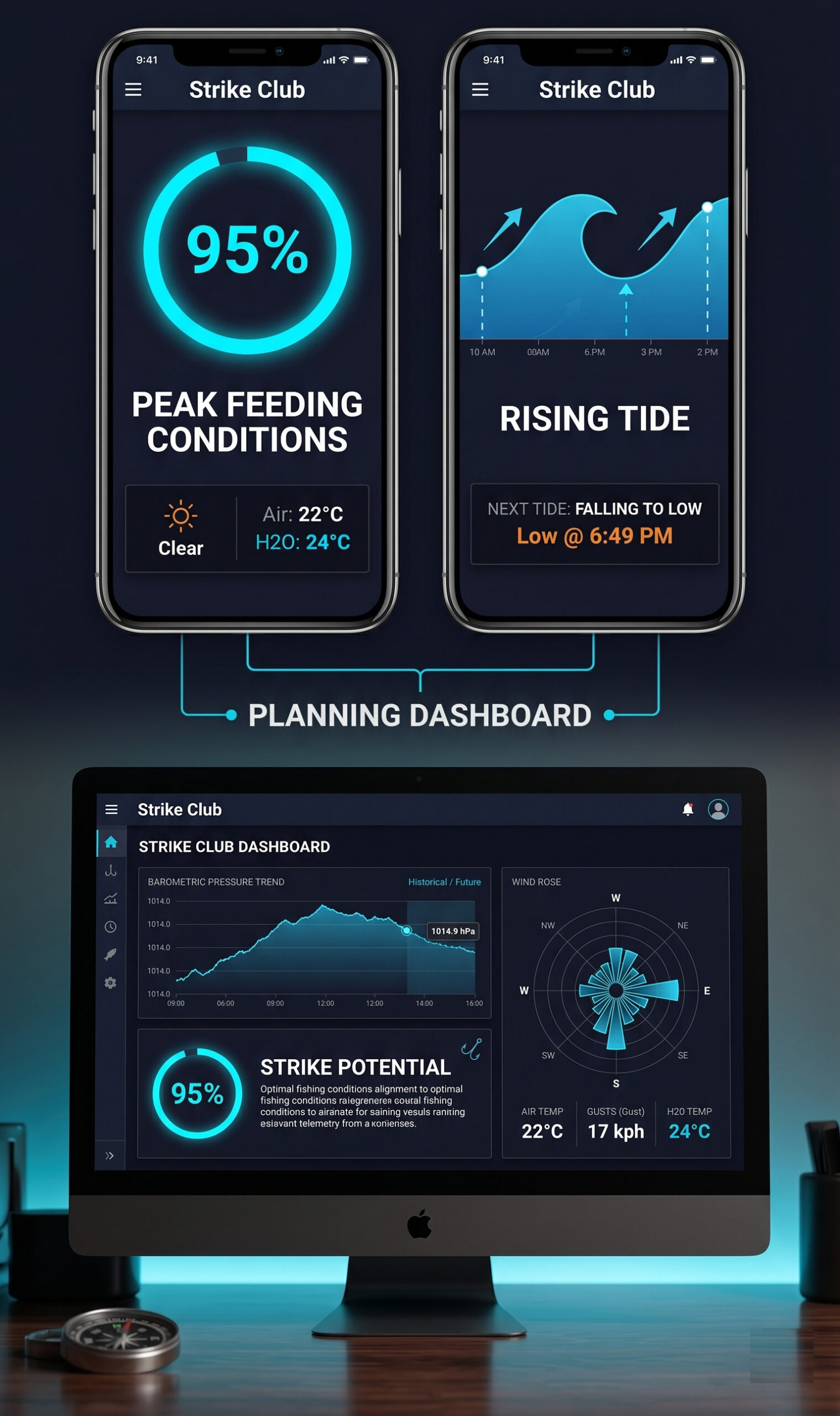
- Field Notes Easily confused with yellowfin bream; always check the head profile and scale count above the lateral line to ensure correct identification. Focus your efforts on the rising tide when fish move onto shallow sand flats to feed.
- Eating Qualities Good eating quality. Tarwhine feature sweet, moist, white fillets with a fine texture. Fillets are best prepared fresh, skinned, and pan-fried in butter, or baked whole with herbs and lemon. Bleed immediately upon capture.