
Appearance & Identification
Golden Perch (Macquaria ambigua) possess a distinctive, deep, and compressed body shape. Their dorsal fin is deeply notched, with spiny rays anteriorly transitioning to soft rays posteriorly. The caudal fin is slightly forked. Body coloration ranges from bronze to gold or olive-green on the back and sides, fading to a lighter, often yellowish-white, ventral surface. Some individuals exhibit a scattering of darker spots on their flanks.
The head is relatively small in proportion to the body, featuring a moderately large mouth. Typical adult sizes range from 30 to 40 centimeters in length and 1 to 2 kilograms in weight. Larger specimens can exceed 60 centimeters and 8 kilograms, though these are less common. The species is identifiable by its robust build and the characteristic golden sheen, particularly noticeable in clear water.
Habitat & Movements
Golden Perch are freshwater inhabitants, predominantly found in the Murray-Darling River system across New South Wales, Queensland, Victoria, and South Australia. They prefer slow-moving or still waters, making them common in large rivers, tributaries, anabranches, billabongs, and substantial impoundments such as dams and reservoirs. Their natural range has been extended through stocking programs into various regional waterways.
Optimal habitat includes areas with submerged timber, rock bars, weed beds, and substantial depth changes. These structures provide ambush points, shelter from currents, and protection from predators. During cooler months, they often congregate in deeper water, while warmer periods see them move into shallower, structured areas to feed.
Tactical Loadout
- Rods 2-4kg spin rod, 6 foot 6 inches to 7 foot length, fast action.
- Reels 2000-3000 size spin reel.
- Line & Leader 8-10lb braided mainline, 10-15lb fluorocarbon leader.
Best Lures & Baits
- Artificials Small crankbaits (50-70mm), Soft plastic grubs or paddle tails (3-4 inch).
- Live & Cut Baits Live yabbies (freshwater crayfish), Worms (scrub worms or garden worms).
Field Tactics
- Trolling Trolling is effective in impoundments. Utilize small to medium-sized diving hard body lures that reach the depth where fish are holding. Maintain a slow, consistent speed, typically 3-5 kilometers per hour. Target submerged structures, contour lines, and creek beds. Vary lure depth and retrieve speed until fish activity is located.
- Drifting & Jigging Drifting can be employed in impoundments or slow-moving river sections. Use live or cut baits presented on a running sinker rig or paternoster rig. Allow the bait to drift naturally with the current or wind, covering a broad area. Ensure sufficient weight to maintain bottom contact without snagging excessively. This method is effective for locating scattered fish.
- Fly Fishing Fly fishing for Golden Perch involves using weighted flies such as small Clouser Minnows, Woolly Buggers, or yabby imitations. Cast flies towards snags, rock walls, and submerged vegetation. Allow the fly to sink, then retrieve with a slow, jerky strip. A 6-8 weight fly rod with a sinking or sink-tip line is generally appropriate for presenting flies to the required depth.
State Legal Limits
- Queensland (QLD) 2025: Minimum size 30 cm, Bag limit 10.
- New South Wales (NSW) 2025: Minimum size 30 cm, Bag limit 5.
- Victoria (VIC) 2025: Minimum size 30 cm, Bag limit 5.
- Western Australia (WA) 2025: Not widely present or a primary recreational target. Refer to local impoundment regulations for specific stocked waters.
- South Australia (SA) 2025: Minimum size 30 cm, Bag limit 5.
- Northern Territory (NT) 2025: Not present.
- Tasmania (TAS) 2025: Not widely present or a primary recreational target.
Please check official state fisheries websites for real-time updates.
Final Logistics & Table Quality
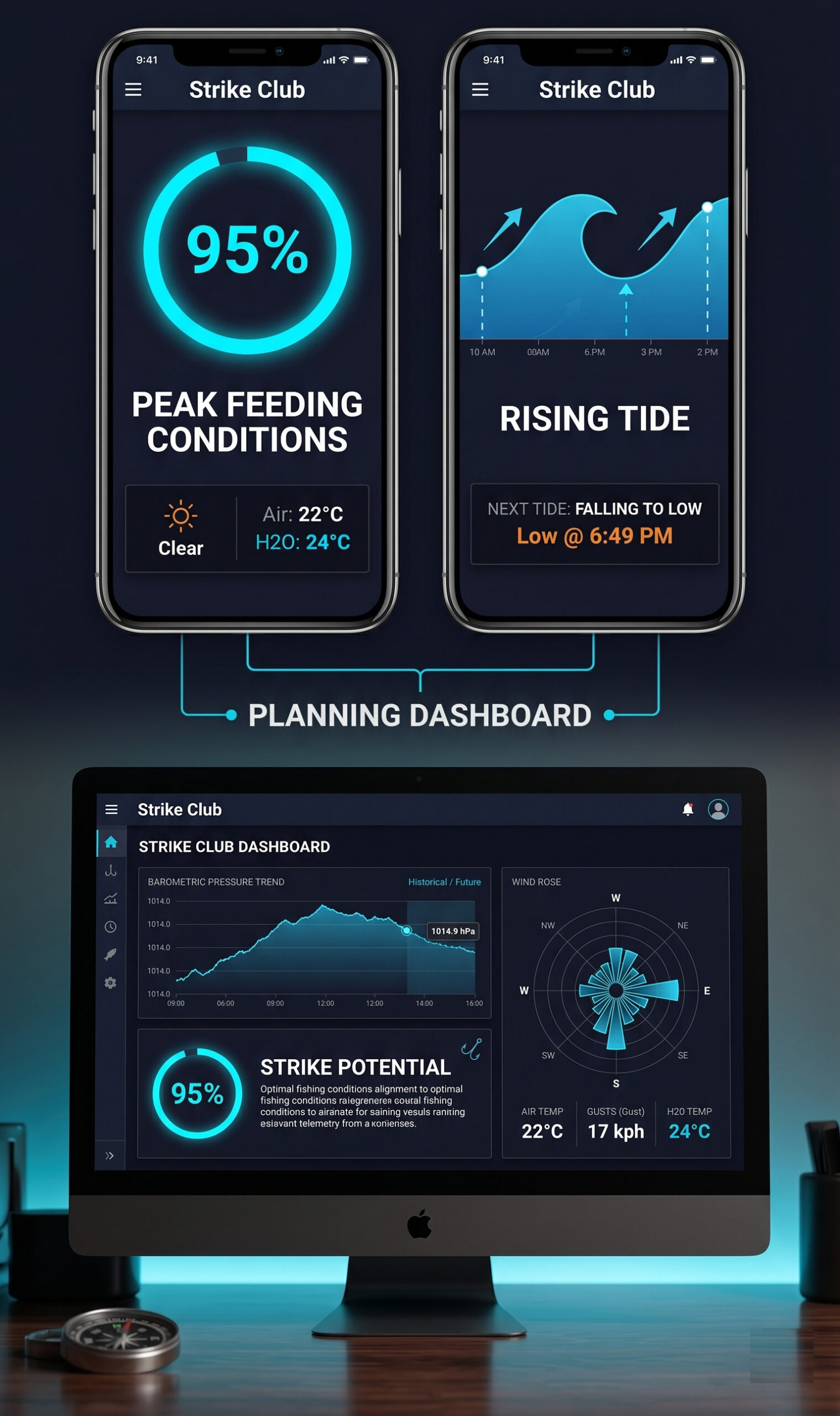
- Field Notes Focus efforts during periods of low light or increased barometric pressure, as these conditions often stimulate feeding activity.
- Eating Qualities Golden Perch possess white, flaky flesh with a delicate, mild flavor, making them an excellent table fish. They are suitable for baking, pan-frying, or grilling. Prior to cooking, ensure the fish is promptly bled and iced post-capture to maintain flesh quality.