
Fishing Palm Beach & Pittwater
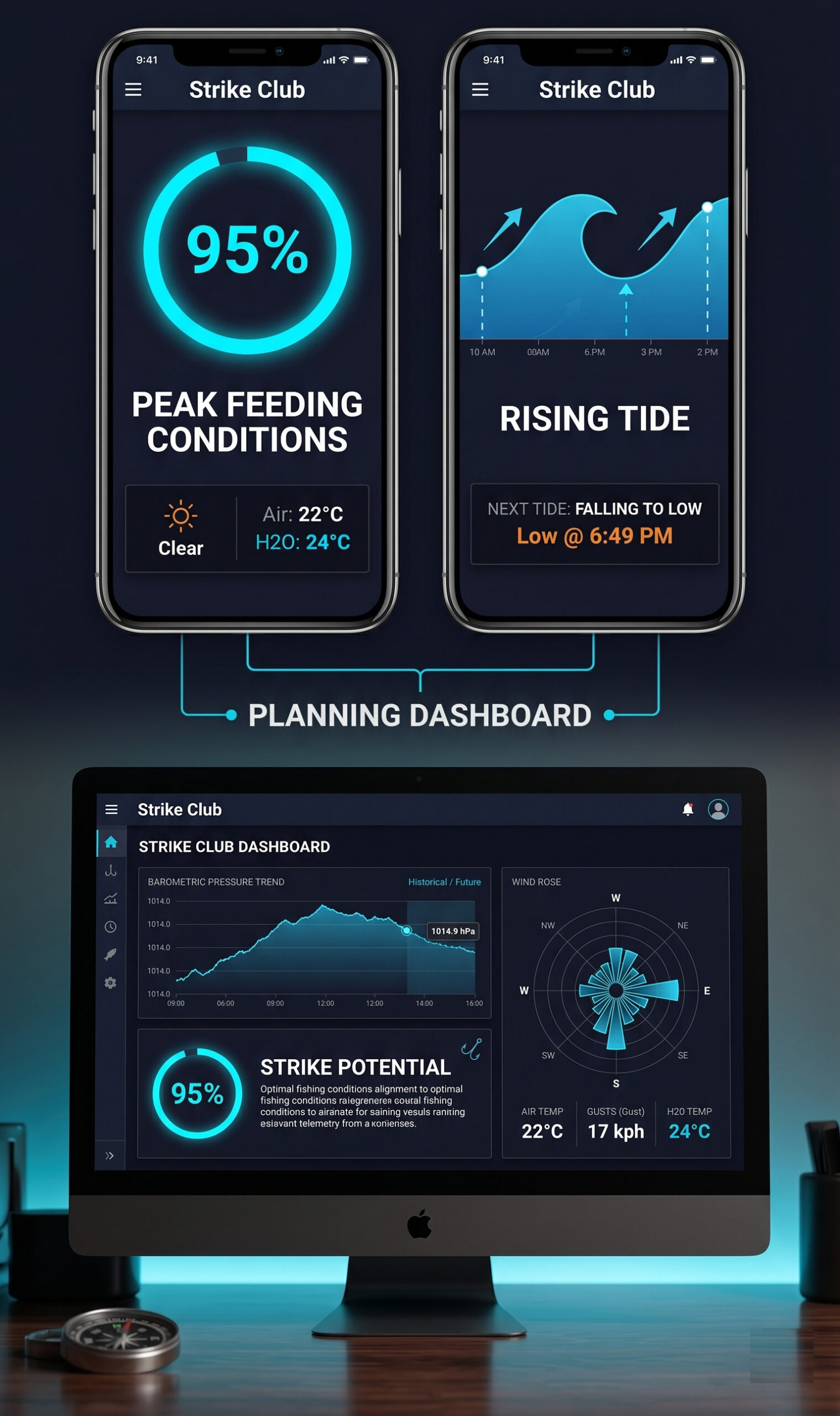
General fishing in Palm Beach & Pittwater relies heavily on tidal movements and water temperature fluctuations to locate migrating pelagic schools. Anglers casting from the shore frequently target bread-and-butter species using light tackle during the top of the tide when flats are inundated. Boaters often deploy downriggers with live bait to tempt large predators patrolling the drop-offs and artificial reefs scattered throughout the system.
Land-based anglers find excellent opportunities fishing the structural eddies around the Palm Beach Ferry Wharf and the rugged rocks of Barrenjoey Headland. Exploring the calmer internal bays allows shore-bound fishers to successfully sound out drop-offs for ambush predators during the run-out tide. Fishing the washes off the ocean-facing rocks yields powerful pelagics, though it requires strict attention to swell conditions and mandatory rock spikes.
Offshore and boat fishing dynamics revolve around deep reefs, submerged wrecks, and the prominent headlands that funnel nutrient-rich currents into Broken Bay. Trolling live yellowtail along the steep underwater contours of Lion Island creates a natural funnel for hooking passing kingfish and giant mulloway. Boaters must exercise extreme caution when crossing between the river mouths, as wind against tide conditions can quickly create dangerous standing waves.
Top 10 Species
Landbased
- Palm Beach Ferry Wharf: This easily accessible timber structure is highly productive for schooling species during the rising tide, especially at dawn or dusk. Anglers achieve the best results using light fluorocarbon leaders and lightly weighted peeled prawns cast into the eddies. Wind protection is moderate, making it a reliable option even when southerly breezes pick up.
- Station Beach: Stretching along the calm Pittwater side, this sandy expanse is perfect for wading and casting during the run-up tide. A light spinning outfit paired with small surface lures or fresh beach worms easily tempts feeding whiting and flathead. The sheltered orientation provides excellent fishing conditions when offshore winds render ocean beaches unfishable.
- Barrenjoey Headland Rocks: This rugged rock platform requires rock spikes and a lifejacket, offering deep water access right at your feet. Heavy spinning gear is necessary to stop powerful kingfish and salmon that hunt in the foaming washes during a rising tide. Calm swell days are mandatory for safe access, usually corresponding with light westerly winds.
- Palm Beach Ocean Side: The deep gutters formed by wave action along this pristine beach are prime ambush zones for large tailor and mulloway. Evening sessions coinciding with a high tide change produce the most consistent strikes when using fresh mullet strips on ganged hooks. Anglers must read the beach to locate the rips, adjusting sinker weights to hold bottom in the shifting sand.
- Careel Bay Sandflats: These expansive shallow flats heat up during summer, drawing in cruising predators looking for a quick meal. Stealth is crucial when wading these clear waters, requiring long casts with lightly weighted soft plastics on a run-out tide. Gentle northerly winds provide the perfect ripple on the surface to conceal angler movements from easily spooked fish.
Offshore
- Barrenjoey Wide: Located several miles offshore, this deep reef system holds massive schools of baitfish and the predators that follow them. Drifting with heavy paternoster rigs baited with fresh squid is the most effective way to extract large snapper and morwong from the structure. Current flows dictate the required sinker weight, and fishing here is best attempted during low wind conditions and small swells.
- Lion Island Drop-off: The steep underwater contours surrounding this iconic island create a natural funnel for tidal currents entering Broken Bay. Slow trolling live yellowtail along the deep edges during the tide changes often results in aggressive strikes from kingfish and mulloway. A sturdy boat is required as wind against tide conditions can quickly create dangerous standing waves in this open channel.
- West Head Reef: This nearshore submerged reef structure is easily accessible for small to medium vessels departing from Pittwater. Anchoring and establishing a consistent burley trail brings silver trevally and snapper right to the back of the boat during the early morning. Southerly winds can make this area choppy, so early sessions on a making tide usually offer the most comfortable and productive conditions.
- Flint and Steel: Situated in the main artery of the Hawkesbury mouth, this location features strong currents and deep rocky holes. Large baits fished hard on the bottom during the slack water periods account for some of the biggest jewfish in the region. The narrow window of fishable current means precise timing and heavy braided lines are essential for success before the flow becomes unmanageable.
- Pittwater Artificial Reef: Deployed to enhance local fishing, this cluster of purpose-built structures provides a reliable haven for marine life inside the calm bay. Drifting over the reef with lightly weighted baits or jigging small metals proves highly successful for a variety of table fish. Its protected location allows safe fishing year-round, regardless of the large ocean swells hammering the outside coastline.
Hot Spots
- The Basin Drop-off: This steep sandy ledge plunges into deep water, acting as a highway for cruising pelagics and large flathead during tidal movements.
- Stokes Point: Casting metal slices from a boat toward the rocky shoreline here consistently produces aggressive strikes from tailor on a rising tide.
- Taylor Point Kelp Beds: Soft plastics slowly worked through the patchy weed beds here yield excellent catches of large bream and luderick in the cooler months.
- Sand Point Channel: Drifting lightly weighted squid strips through this narrow channel on the outgoing tide is highly effective for schooling whiting.
- Mackerel Beach Drop: Anchoring just off this secluded beach and deploying a light berley trail brings massive schools of trevally to the surface.
Local Bait Tips
- Saltwater Nippers: Pumping nippers using a hand-operated suction pump on intertidal flats is a highly effective way to secure premium live bait for estuary species. NSW regulations strictly prohibit the use of spades or forks in these sensitive habitats to protect the underlying seagrass beds.
- Poddy Mullet: While cast nets are strictly illegal in NSW, approved clear-plastic poddy mullet traps are perfectly legal and permitted in NSW estuarine creeks for harvesting live bait. Using these traps allows anglers to easily collect high-quality baits to target dusky flathead and mulloway.
- Yellowtail Scad: These essential live baits are easily caught around public wharves using an ultra-light sabiki bait-catching rig heavily sweetened with small pieces of prawn. Using burley like breadcrumbs keeps the school active around your lightly weighted rig, ensuring you gather a healthy supply legally.
Boat Ramps
- Bayview (Rowland Reserve) Boat Ramp, Pittwater:
Bayview (Rowland Reserve) Boat Ramp: Located at Pittwater Road within Rowland Reserve, this facility features a multi-lane concrete configuration. Staging infrastructure includes a finger staging pontoon and a refurbished timber wharf with disabled access. Critical navigational hazards and tidal limits to note are strong westerly winds blowing directly across the launch lanes, a side-on low-tide trailer push hazard, and expensive parking fees.
- Palm Beach (Sand Point) Boat Ramp, Pittwater:
Palm Beach (Sand Point) Boat Ramp: Located at Sand Point Lane in Iluka Park on the Pittwater foreshore, this facility features a dual-lane concrete configuration. Staging infrastructure includes a boarding staging pontoon. Critical navigational hazards and tidal limits to note are groundwater flooding of low-lying structures, extreme weekend traffic congestion, paid trailer parking zones, and proximity to Barrenjoey Head Aquatic Reserve limits.
- Avalon Boat Ramp, Pittwater:
Avalon Boat Ramp: Located at Pittwater Park on the Avalon foreshore, this facility features a single concrete lane configuration. Staging infrastructure is not provided. Critical navigational hazards and tidal limits to note are severe summer parking restrictions due to heavy local beach-goer traffic.
Bait and Tackle
- Narrabeen Bait and Tackle: 1400 Pittwater Rd, Narrabeen NSW 2101 | Phone: 02 9970 8295
- BCF Mona Vale: 29/31 Pittwater Rd, Mona Vale NSW 2103 | Phone: 02 9997 1234
- Ampol Newport: 349 Barrenjoey Rd, Newport NSW 2106 | Phone: 02 9999 1111
Basecamp & Accom
- YHA Pittwater Eco: Halls Wharf, Pittwater NSW 2105 | Phone: 02 9999 5748
- NRMA Ocean Beach Holiday Resort: Sydney Ave, Umina Beach NSW 2257 | Phone: 1800 611 522
- The Newport: 2 Kalinya St, Newport NSW 2106 | Phone: 02 9994 2400
- Logistical Warning: NRMA Ocean Beach Holiday Resort is located at Umina Beach on the Central Coast. Because there is no road bridge across the mouth of the Hawkesbury River, driving from Palm Beach to Umina Beach requires a massive detour inland via the M1 motorway. For a direct on-water alternative, YHA Pittwater Eco offers local unique accommodation accessible via ferry or water taxi from Church Point to Halls Wharf
Emergency & Safety
- Emergency: 000 | Marine Rescue Broken Bay: Rowland Reserve, Bayview NSW | Phone: (02) 9973 9200