Fishing Bribie Island
General fishing across Bribie Island and the Pumicestone Passage revolves around the massive tidal movements and diverse estuarine structures. The cooler winter months bring schooling snapper and sweetlip into the passage's deeper channels, while the summer heat triggers aggressive flathead, sand whiting, and mud crabs. Anglers should focus on the tidal changes, as the run-up tide brings baitfish onto the expansive sand flats and activates local predators.
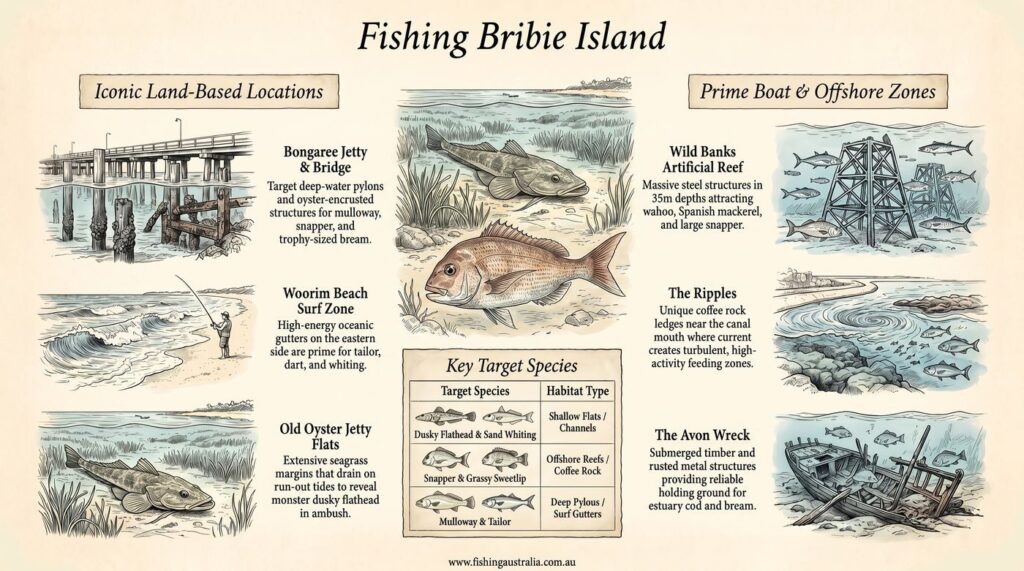
Land-based anglers gather at the iconic Bongaree Jetty and the expansive sandy flats of Sylvan Beach and Sylvan Point. Casting light soft plastics or drifting fresh baits of yabbies and worms into the incoming tidal gutters produces highly consistent catches. The eastern surf beaches also offer spectacular, high-energy beach gutters for targeting tailor and swallowtail dart.
Boat and kayak anglers are spoiled for choice with deep channel ledges and shallow reef structures lying just minutes from the main harbours. Key spots like the Bribie Bridge pylons and Gallagher's Gutter hold outstanding fish. Drifting with light running-sinker rigs or anchoring on the steep clay ledges is the ultimate way to target these hard-fighting predators.
Rules check: most of Pumicestone Passage, including the water off Bongaree and Bellara and at the Bribie Bridge, is a yellow zone (conservation park zone). There you can use no more than 2 rods or handlines each, with no more than 2 hooks in total each, and no more than 4 crab pots, dillies or collapsible traps. The green zones (no fishing) in the passage are at Westaways Creek on the north end of Bribie Island and around Tripcony Bight–Long Island. Check the Qld Marine Parks app before you fish a new spot.
Top 10 Species
Landbased
- Bongaree Jetty: This famous timber pier drops off into deep water, making it a premier land-based hotspot for bream, flathead, and big winter squid on the rising tide. Anglers use light weighted soft plastics or drift fresh baits of peeled prawns close to the pylons under the cover of darkness. It is highly recommended to use a heavy-duty landing net to lift larger fish safely onto the high timber deck.
- Sylvan Beach: Located on the western foreshore, these expansive sandy flats are an absolute hotspot for wading anglers chasing big dusky flathead on shallow-running hardbodies. Work the area during the first three hours of the run-out tide, focusing your casts on the draining sand bars and weed edges. This location offers highly comfortable family access with nearby parking, making it a highly popular weekend choice.
- Toorbul Foreshore: Situated on the western side of the passage, these quiet clay flats and sand bars hold exceptional numbers of summer whiting and flathead. Cast long distances with light running-sinker rigs loaded with fresh pumped yabbies or worms directly into the incoming tidal gutters. The area is highly dependent on low-wind conditions, as strong easterlies can stir up the shallow mud and turn the water murky.
- Skirmish Point: Located at the southern tip of the island, this high-energy beach point is a premier location for casting metal lures into the surf wash for tailor and dart. Wading the gutter edges during a rising tide at dawn or dusk produces outstanding sportfish action on light spin gear. Ensure you fish this spot with extreme caution and never turn your back on the ocean, as unpredictable swells are common.
- White Patch: This quiet, mangrove-lined reach on the western side of the island is a highly productive flathead and bream hotspot. Wading the shallow mud flats on a draining tide while casting soft plastic paddle tails or live prawns into the mangrove drains is a deadly local tactic. Anglers experience the most consistent success during the late afternoon when the shadows stretch over the water.
Offshore
- Gallagher's Gutter: A deep, fast-flowing channel on the western side of the island that acts as a major highway for big flathead, mulloway, and tailor. Anchoring on the steep clay ledges and casting baits back into the deeper drop-offs is the preferred boat tactic. Use heavy running sinker rigs with circle hooks and tough baits like fresh squid or yakka to resist the strong tidal currents.
- Poverty Creek Ledges: A rugged underwater rock and clay ledge system that drops off quickly into deeper water, creating a highly active ambush zone. It is a productive spot for catching estuary cod, bream, and sweetlip on both bait and lures. Drifting with fresh cut baits or casting heavy soft plastics along the drop-off during the peak of the run-in tide is the preferred local technique.
- Lime Pocket: A highly sheltered, shallow sand and weed flat located in the upper passage that is a hotspot for boaters targeting sand whiting and flathead. Work the area during the first three hours of the run-out tide, casting soft plastic grubs or swimbaits over the draining sand bars. The muddy pockets and seagrass zones here also host abundant populations of mud crabs and sand crabs.
- Bribie Bridge Pylons: The massive concrete structures supporting the main bridge hold vast schools of jewfish, giant flathead, and big winter bream. Fishing the slack water turn of the tide with soft plastic paddle tails or fresh drifted live baits near the bridge support pillars is a highly productive tactic. Strong tidal currents sweep through this channel, meaning heavier jig heads or sinkers are required to stay in the strike zone.
Local Bait Tips
- Bass Yabbies: Highly abundant and easily pumped using a stainless steel yabby pump from the extensive sand and mud flats of Banksia Beach and Bongaree during low tide. They are the absolute premier live bait for targeting quality sand whiting and yellowfin bream inside the passage.
- Beach Worms: Extracted by hand along the high-energy surf zone of Woorim Beach on the eastern ocean side of the island. Anglers use a smelly bait bag containing fish frames or squid to draw the worms to the surface before securing them with a firm grip behind the head.
- Bloodworms: Pungent and highly effective baits that are found in the mud flats of the passage at low tide. Don't dig them with a fork at Ningi Creek. It is inside the Pumicestone Channel Fish Habitat Area, where the only digging tool allowed is a hand pump (yabby pump). They are highly sought after by local whiting specialists and must be kept moist on damp newspaper.
Boat Ramps
- Marine Parade Boat Ramps, Bellara:
Located at Marine Parade in Bellara, these two concrete ramps feature an adjacent floating walkway.
- Fifth Avenue Boat Ramps, Bongaree:
Located at Fifth Avenue in Bongaree, these two concrete ramps provide direct access to the Pumicestone Passage.
- First Avenue & Freeman Road Boat Ramps, Toorbul:
Located at First Avenue and Freeman Road in Toorbul, these two concrete ramps feature an adjacent floating walkway.
Bait and Tackle
- BRIBIE BAIT TACKLE AND BIKES: 1 Welsby Parade, Bribie Island QLD 4507 | Phone: (07) 3408 1347
- REEL-EM-IN FISHING GEAR: 21 Jasmin Drive, Bongaree QLD 4507 | Phone: (07) 3803 0700
- ISLAND FISHING SUPPLIES: Shop 4, 11/13 Marine Parade, Bellara QLD 4507 | Phone: 0493 103 027
- TACKLE WORLD LAWNTON: 2/640 Gympie Road, Lawnton QLD 4501 | Phone: (07) 3205 7475
Basecamp & Accom
- Bribie Waterways Motel: 159 Welsby Parade, Bongaree QLD 4507 | Phone: (07) 3408 2444
- BIG4 Bribie Island Caravan Park: 2 Woorim Road, Woorim QLD 4507 | Phone: (07) 3408 1134
- Bongaree Caravan Park: Welsby Parade, Bongaree QLD 4507 | Phone: (07) 3408 1054
Emergency & Safety
- Marine Rescue Bribie Island: 4 Marine Parade, Bellara QLD 4507 | Log on/off: VHF 73 or (07) 3408 7596 | VHF channels monitored: 16, 20, 21, 63, 67, 72, 73, 81 | Emergency: VHF 16 or 000